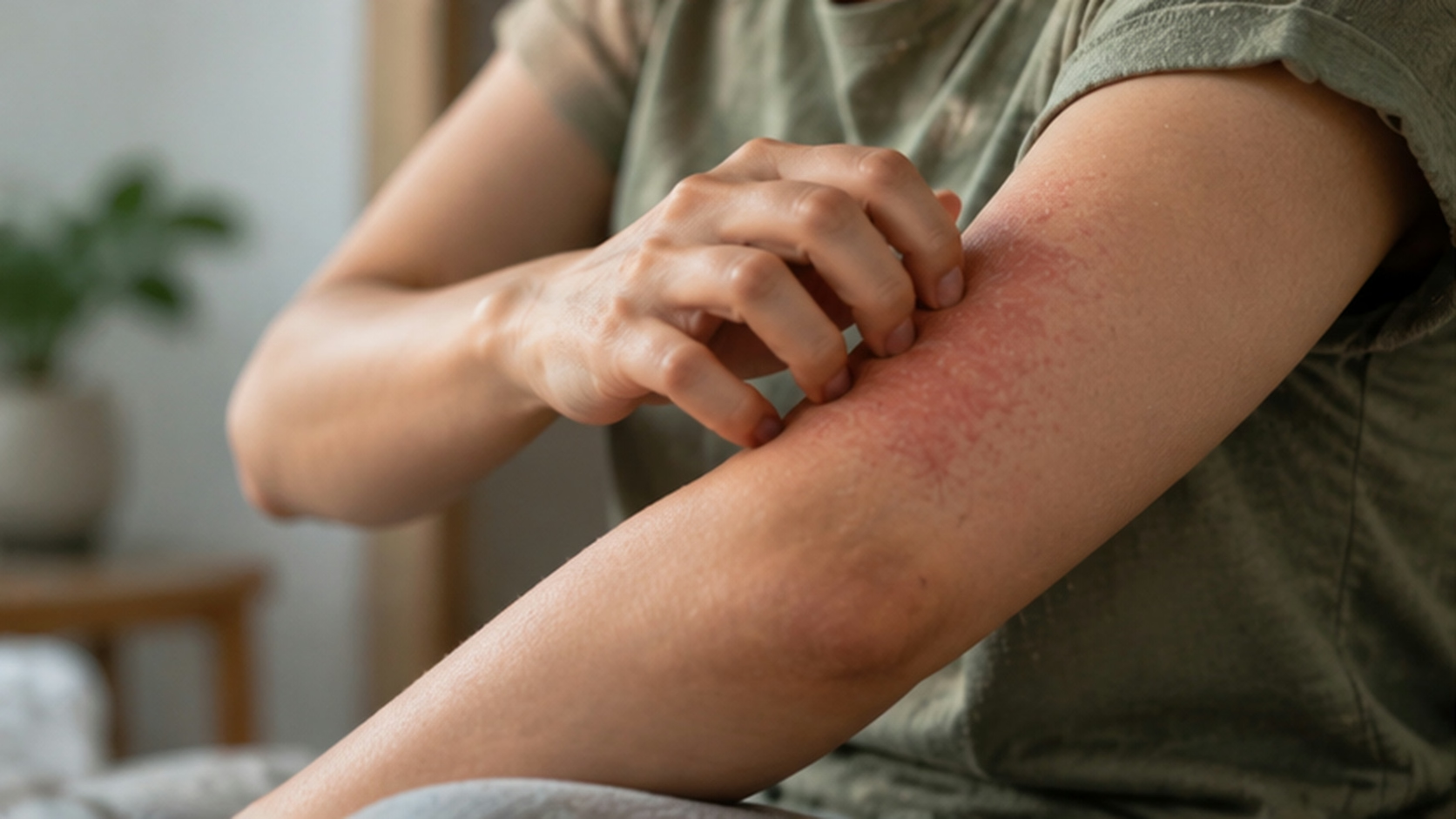
It is one of the most frustrating aspects of managing eczema: your skin feels manageable during the day, but the moment your head hits the pillow, an intense, unbearable itch takes over. This nighttime flare isn’t in your head—it’s a well-documented physiological response. Understanding why it happens is the first step toward breaking the scratch-itch cycle and finally getting a peaceful night’s sleep.
The Science Behind the Nighttime Itch
Several biological shifts occur in your body as day turns to night:
- Fewer Distractions: Without the movement and focus of daytime activities, your brain becomes hyper-aware of bodily sensations—amplifying every minor prickle or itch.
- Circadian Rhythm & Temperature: Your body’s core temperature drops slightly before sleep, sending blood flow to the skin’s surface. This increase in skin temperature triggers itching sensations.
- Natural Steroid Drop: Cortisol, your body’s natural anti-inflammatory hormone, naturally dips to its lowest levels in the evening, leaving skin inflammation unchecked.
- Transepidermal Water Loss: Skin loses moisture faster at night, leading to dry, tight skin that is far more prone to irritation.

Explore our ultra-soft, protective eczema clothing designed to stop the nighttime itch-scratch cycle.